Two dentists can produce similar numbers and take home very different incomes.
In the highly competitive world of dentistry, many practitioners believe that the path to greater profitability is paved with longer hours, more procedures, and an unrelenting push to “see more patients.” However, as explained in Episode 29 of My Dental Playbook by Dr. Blake Hamblin, the difference between a moderately successful practice and an exponentially profitable one is rarely a matter of superior talent or sheer effort.
Shift 1: Knowing Real Numbers
High-performing dental practices are fundamentally driven by data, not guesswork. The most successful dentists possess an intimate understanding of their core financial metrics, including their overhead costs, profit margins, and adjusted production figures. Operating without this clarity inevitably leads to financial “drift,” where the practice’s profitability slowly erodes without the owner realizing the underlying cause.
When real, precise numbers are absent, practice management decisions become reactive and emotional, rather than proactive and strategic. For instance, a dentist might impulsively invest in a new piece of technology because a colleague did, without first calculating the true Return on Investment (ROI) and how it fits into the current production per hour goal. Similarly, compensation decisions or fee schedule adjustments can be made based on fear or a gut feeling instead of being anchored in verifiable data on collections and cost of labor.
Strategic decision-making, conversely, requires a clear-eyed view of the Key Performance Indicators (KPIs). Understanding overhead down to the percentage point allows the dentist to pinpoint areas for optimization or responsible expansion. A firm grasp of adjusted production, the true value of services rendered after factoring in write-offs, insurance adjustments, and non-collectible debt, is essential for setting accurate production goals and forecasting future revenue. Ultimately, this numerical foundation transforms the dental practice from a technically proficient clinical facility into a sustainably profitable business enterprise.
Shift 2: Standards Over Emotion
Clear expectations are not merely a suggestion for a well-run dental practice; they are the bedrock upon which stability, accountability, and financial success are built. In any team environment, a lack of clarity is a breeding ground for confusion, stress, and inefficiency; a true source of chaos that silently erodes your practice’s potential.
Clear expectations remove chaos. When every team member understands their role, the standards of performance, and the procedures for every task, the guesswork vanishes. This proactive approach prevents the majority of common workplace friction and errors. It shifts the environment from one of reactive problem-solving to one of smooth, predictable operation.
Practices that enforce standards consistently experience:
- Fewer fires: Consistent enforcement is the key to prevention. When standards are a non-negotiable part of the daily routine, from scheduling and insurance verification to sterilization and patient communication, major crises become rare. Staff spend less time cleaning up avoidable mistakes and more time focusing on delivering exceptional patient care.
- Stronger accountability: When the line is clearly defined, it is impossible to accidentally cross it. Clear standards mandate specific behaviors and measurable outcomes, making it straightforward to identify where performance is excelling and where coaching is needed. Accountability is no longer punitive; it is a simple mechanism for performance management and professional development.
- Better financial outcomes: Chaos is expensive. Time spent correcting charting errors, re-filing claims, managing patient complaints due to miscommunication, or dealing with high staff turnover directly impacts the bottom line. By enforcing clear standards, practices optimize workflows, maximize billing accuracy, minimize waste, and improve the patient experience, leading directly to higher case acceptance, stronger patient retention, and greater profitability.
Avoiding hard conversations is expensive. The most common reason standards are not consistently enforced is the fear of conflict. Dentists and practice managers often avoid having direct, difficult conversations about underperformance or non-compliance. This avoidance, however, sends a devastating message to the entire team: standards are optional. This allowance for mediocrity inevitably leads to resentment among high-performing staff, further deterioration of discipline, and ultimately, the complete breakdown of the practice system. The financial, emotional, and organizational cost of ignoring these “hard conversations” far outweighs the temporary discomfort of having them. Establishing and consistently upholding standards is a sign of leadership, and it is the single most effective way to ensure a peaceful, productive, and prosperous practice.
Shift 3: Leverage Beats Volume
The conventional wisdom in dentistry often suggests that increased production is the direct path to success. However, this pursuit can lead to a significant increase in stress for the entire practice team. More procedures mean more complex scheduling, higher material and lab costs, a greater risk of clinical complications, and ultimately, a heavier emotional and physical burden on the dentist and staff. This treadmill of volume often sacrifices quality of life and genuine connection with patients.
Conversely, a focus on better case acceptance is the true catalyst for professional and personal freedom. When a practice excels at communicating the value of comprehensive treatment plans, conversion rates naturally increase. This doesn’t necessarily mean doing more total procedures, but rather performing higher-value, more appropriate procedures for a loyal patient base. High case acceptance leads to a more predictable schedule, fewer last-minute cancellations, better utilization of clinical time, and a healthier bottom line without the overwhelming burden of frantic, volume-based production.
The Strategy of High-Income Practices
The most successful, high-income dental practices understand that sustainable growth is achieved through optimization, not just sheer volume. Before attempting to cram more appointments into the day, a common but flawed strategy, these practices strategically focus on two critical areas:
- Improving Conversion (Case Acceptance): This is about refining the entire patient journey, from the initial phone call to the presentation of the treatment plan. It involves superior communication skills, effective patient education, building deep trust, and ensuring financial conversations are handled with clarity and empathy. When the team is skilled at conversion, the practice can operate at a higher production level with the same or even fewer patients, transforming the practice from reactive to proactive.
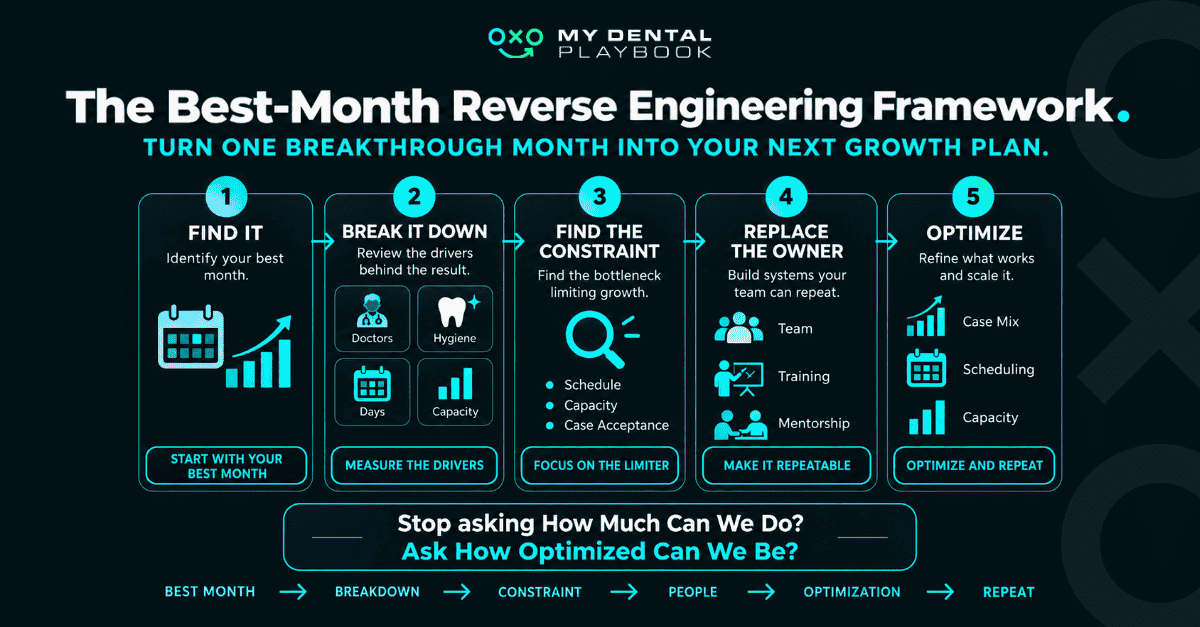
- Reducing Bottlenecks: Every practice has constraints, the “bottlenecks” that limit overall throughput and create internal friction. Common bottlenecks include inefficient patient check-in/check-out processes, slow lab turnaround times, poor inventory management, inefficient operatory turnover, and scheduling conflicts. High-performance practices relentlessly identify and resolve these friction points. By streamlining operations and maximizing the efficiency of existing resources (staff, time, equipment), they create capacity organically.
By prioritizing improved conversion and operational efficiency, these practices build a foundation for sustained, stress-free growth. They achieve higher production per hour, per patient, and per team member, leading to greater financial success and an improved quality of life for everyone involved. They shift the focus from the exhausting pursuit of volume to the liberating achievement of value.
Shift 4: Culture Multiplies Results
Culture is not soft. It is a multiplier, a tangible force that directly impacts the bottom line and operational efficiency. It’s the silent operating system that governs how work gets done, transforming intentions into measurable results.
When a cohesive and positive culture is established, teams gain invaluable clarity. This clarity acts as a powerful accelerator, enabling them to move faster through decision-making processes and execution cycles. When priorities, values, and goals are clearly understood and shared, ambiguity is removed, preventing the “great slowdown.”
Furthermore, this enhanced clarity serves as a robust defense against errors. Teams that understand the why behind their tasks are far less likely to make mistakes, leading to superior execution. This precision in action is directly tied to protecting margins; every error avoided is a cost saved, every rework prevented is efficiency gained, and every process executed correctly on the first attempt directly improves profitability. A strong, clear culture is not a perk; it is the fundamental infrastructure for sustained, high-margin business performance.
Final Thought
Income is not a fortunate accident or a byproduct of simply opening your doors; it is meticulously designed, not accidentally discovered.
This fundamental truth applies to every aspect of a successful dental practice. Profitability, the true measure of your financial health, is not a mystical occurrence that happens simply because you are busy. Profitability stems from consistent, systematic, and diligent review of intentional choices regarding pricing, overhead control, service mix, patient retention, and operational efficiency. Sustainable financial success stems from building a robust framework of strategic decisions and adhering to them, rather than hoping for a favorable outcome.